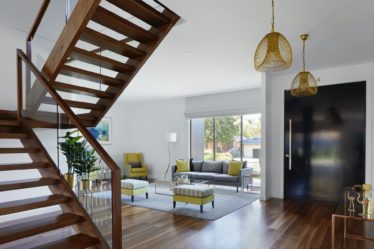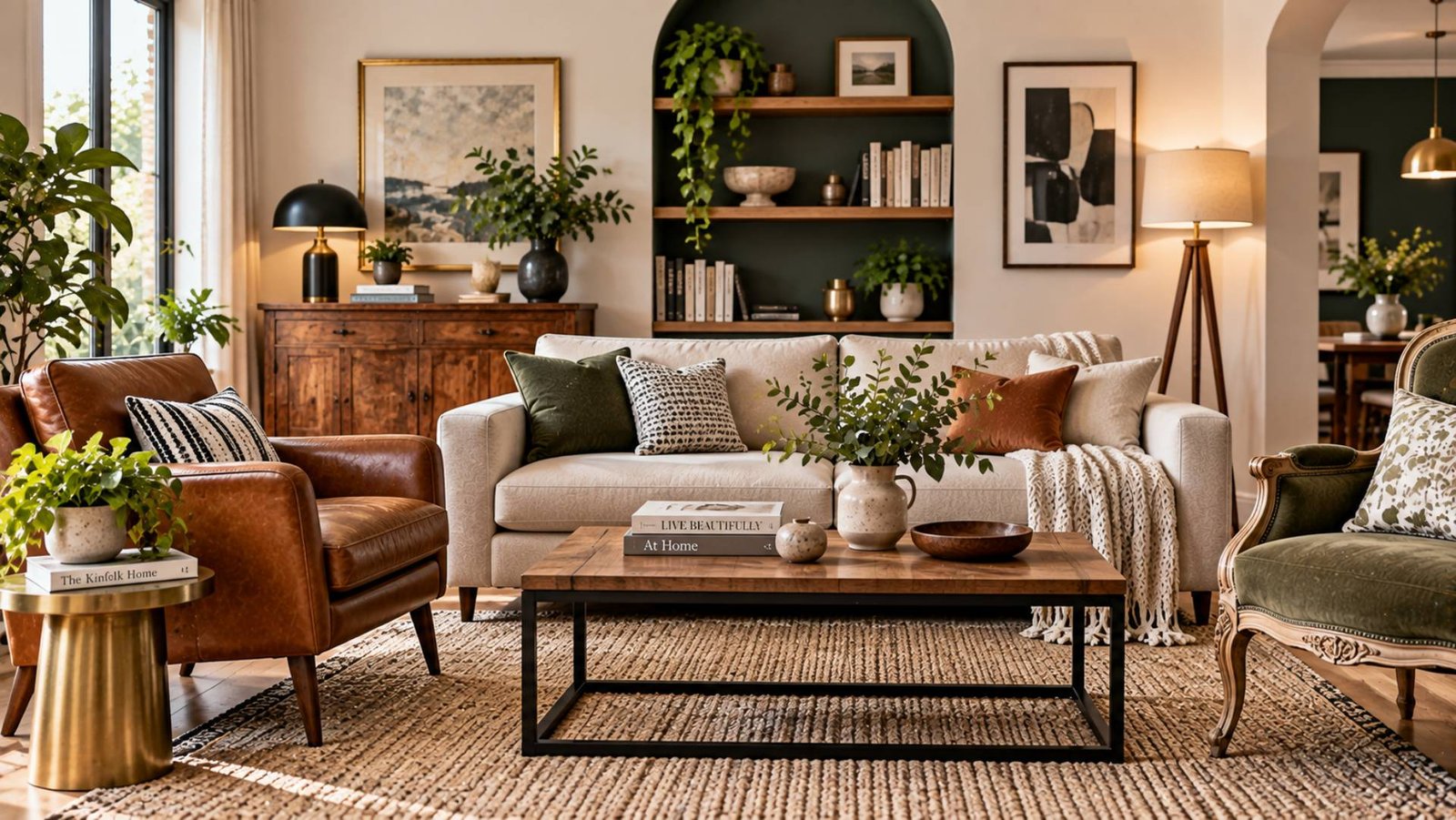
Mixing furniture styles can make a home feel more personal and interesting than furnishing every room from one matching collection. A modern sofa beside an older wooden table, for example, can create character when the colours, proportions and materials work together.
The key is balance. Different pieces do not need to look identical, but they should share enough visual connection to make the room feel intentional rather than random.
Start with One Main Style
Choose one style to act as the foundation of the room. It might be modern, traditional, Scandinavian, industrial or rustic.
Once the main direction is clear, introduce contrasting pieces gradually. A mostly contemporary living room might include an antique side table, while a traditional room could benefit from a cleaner modern chair or lamp.
Keeping one style dominant makes it easier to experiment without losing visual consistency.
Use Colour to Connect Different Pieces
Colour is one of the simplest ways to make contrasting furniture work together.
Furniture from different periods can still look coordinated when similar shades appear throughout the room. A warm brown vintage cabinet, for example, can work comfortably with modern furniture if the same warm tones appear in cushions, artwork or flooring.
You do not need exact colour matches. Repeating a small palette across different pieces is usually enough to create a connection.
Mix Old and New Carefully
Combining older furniture with contemporary pieces can give a room depth and personality.
A vintage chest beside a modern bed or an older dining table paired with simple contemporary chairs can create attractive contrast. Choosing timeless furniture also gives you pieces that can adapt as other parts of the room change.
Avoid filling the entire space with statement furniture. A few distinctive older pieces usually have more impact when surrounded by simpler designs.
Pay Attention to Proportion
Even very different styles can work together when furniture is similar in visual scale.
A delicate side chair may look awkward beside an oversized sofa, regardless of colour or style. Likewise, a heavy antique table can dominate a room filled with lightweight contemporary furniture.
Look at height, width and visual weight when arranging pieces. Furniture should feel balanced within the room as well as with the items around it.
Connect Furniture Through Materials
Repeating materials can bring very different styles together.
Wood is particularly useful because similar timber tones can create continuity between old and new furniture. Metal, glass, leather and natural fabrics can also provide connecting elements.
You can also update older seating with suitable upholstery fabric to help it sit more comfortably alongside newer furniture without removing its original character.
Understand Different Furniture Styles
Knowing the basic features of different styles helps you decide which combinations are likely to work.
Modern furniture often uses clean lines and simple forms, while traditional pieces may feature richer materials and decorative details. Industrial furniture tends to include metal and darker finishes, while Scandinavian designs usually favour simplicity, lighter timber and practical shapes.
Understanding different furniture styles makes it easier to identify useful contrasts and common elements before bringing several looks into one room.
Repeat Shapes Around the Room
Shape can create harmony even when furniture comes from different design periods.
If you have a curved vintage armchair, repeating softer shapes through a round coffee table, lamp or mirror can help it feel connected to the rest of the room.
The same principle works with straight, angular furniture. Repetition gives the eye a pattern to follow and makes mixed pieces feel more deliberate.
Keep Some Elements Simple
When several furniture styles are already competing for attention, keep other parts of the room quieter.
Neutral walls, simple curtains and restrained accessories can provide a calm background. This allows unusual furniture pieces to stand out without making the room feel busy.
Not every object needs to make a statement. Simple supporting pieces are often what make stronger furniture choices work.
Use Rugs to Bring Furniture Together
A well-sized rug can visually connect pieces that might otherwise feel separate.
In a living room, position the rug so it relates to the sofa, chairs and coffee table rather than floating beneath just one item. This creates a defined seating area and helps different furniture designs feel like part of one arrangement.
Choose a rug that complements the room’s main colours without competing with patterned upholstery or detailed furniture.
Add Contrast Gradually
Mixing styles works best when the room develops over time.
Start with one contrasting piece and see how it changes the space. You can then introduce additional items if the room still feels balanced.
This gradual approach helps prevent impulse purchases and gives you time to understand which combinations genuinely suit your home.
FAQs
Can modern and traditional furniture work together?
Yes. Modern and traditional furniture can complement each other when colour, scale and materials create a visual connection between the pieces.
How many furniture styles should I mix?
There is no fixed number, but using one dominant style with one or two supporting influences usually makes a room easier to balance.
Does furniture need to match in colour?
No. Furniture does not need to match exactly. Repeating related colours or materials throughout the room can create enough consistency.
Can I mix different wood tones?
Yes. Different wood tones can work together, especially when their warm or cool undertones are compatible. Repeating each tone in more than one place can make the combination feel intentional.
How do I stop mixed furniture from looking cluttered?
Limit unnecessary accessories, maintain clear walking space and use a consistent colour palette. Allow distinctive furniture pieces enough room to stand out.
Conclusion
Successful furniture mixing is less about following strict rules and more about creating visual connections. Colour, scale, materials, shapes and repeated details can help furniture from different periods and styles sit comfortably together.
Start with a clear foundation and introduce contrasting pieces thoughtfully. When each item has a purpose and shares something with the wider room, mixed furniture can create a home that feels collected, comfortable and individual.