Broken or shattered glass creates an immediate problem. It leaves a property exposed to weather, reduces security and can pose a safety risk from sharp edges. Knowing what to expect when you call for help removes some of the uncertainty at a stressful moment.
Most people contact an emergency glazing service after an incident such as a broken window, a failed double-glazed unit or damage to a door. Understanding the usual sequence of events helps you prepare the site, ask the right questions and know what the glazier will do once they arrive.
Making the Initial Call
The process begins with a phone call. You will be asked for the location of the property, the type of glass involved and a brief description of the damage. Details such as whether the glass is single or double glazed, the approximate size of the opening and whether the site is secure help the operator decide the most suitable response.
You may also receive immediate safety advice. This often includes keeping people and pets away from the area, avoiding contact with broken edges and not attempting to remove large shards yourself. Once the basic information is clear, a glazier is usually dispatched. Response times vary according to location and traffic, but many services aim to reach the property within a reasonable window, often measured in under two hours.
Arrival and Safety Assessment
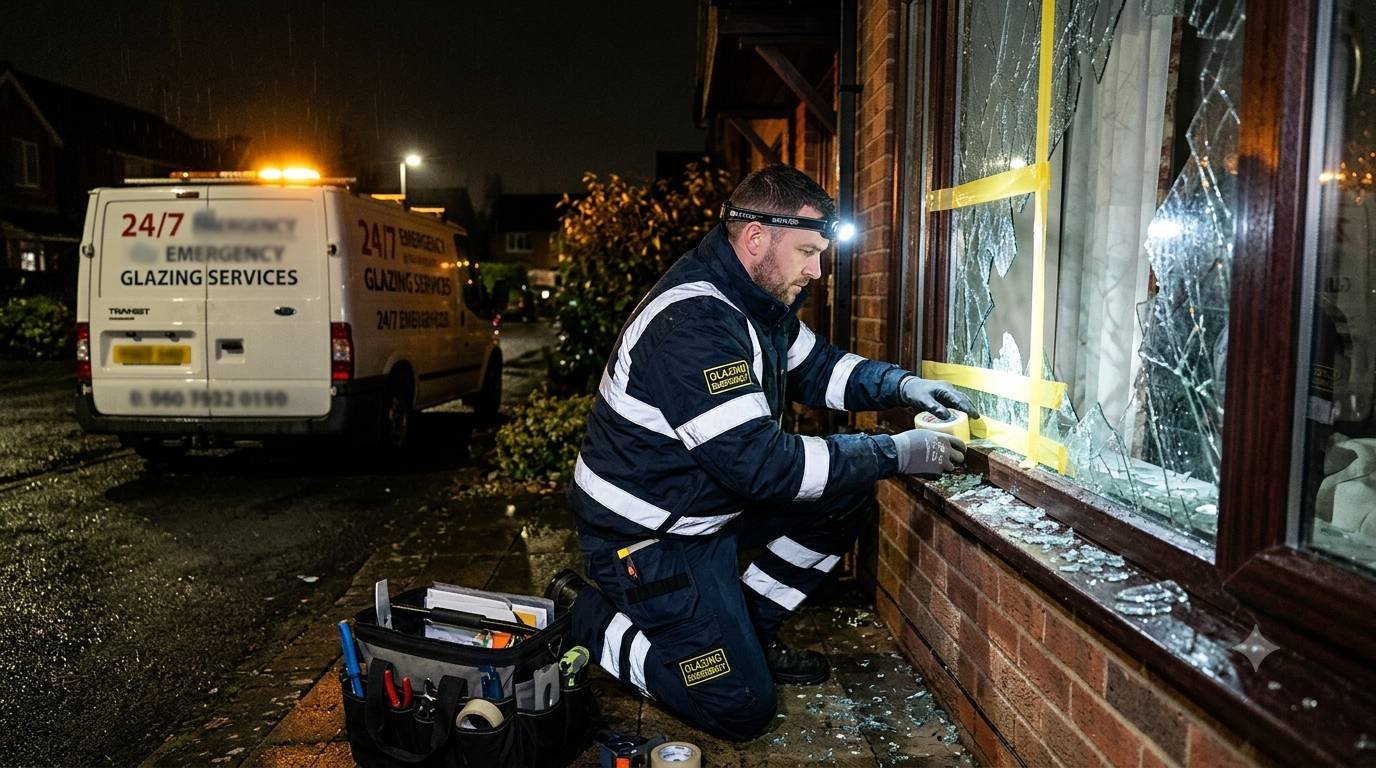
When the glazier arrives, the first priority is safety. They will examine the damaged area, identify any remaining loose glass and check for risks to people using the space. Protective equipment is used while clearing sharp fragments from the frame, floor and surrounding surfaces.
Photographs are commonly taken at this stage. These records help document the damage for insurance purposes and provide a clear record of the condition before any work begins. The glazier will also inspect the frame itself to see whether it is intact or whether additional repairs are needed before new glass can be fitted.
Temporary Security Measures
In many cases the permanent replacement glass cannot be fitted straight away. Double-glazed units, for example, often need to be made to exact measurements and may require a short manufacturing period. Until the new glass is ready, the opening must be made secure and weatherproof.
Temporary boarding is the most common solution. Strong sheets are fixed securely over the frame to restore security and keep out rain or wind. For single glazing or certain smaller repairs it may be possible to fit a temporary pane on site. The glazier will explain which option is appropriate and how long the temporary measure is likely to remain in place.
Measuring and Planning the Permanent Repair
Once the immediate risk is controlled, accurate measurements are taken. The glazier records the dimensions of the frame, notes the type of glass originally fitted and checks for any special features such as toughened or laminated panes. These details determine the specification of the replacement unit.
You will usually receive an explanation of the next steps. This includes the expected time for manufacturing the new glass, the installation process and any decisions you need to make about glass type or additional features. Clear communication at this point helps avoid misunderstandings later.
Installation of the Permanent Glass
When the replacement glass is ready, a second visit is arranged. The temporary boarding is removed and the new unit is fitted carefully into the existing frame. Seals and beads are replaced as needed to ensure a weather-tight finish. The glazier will check that the window or door operates correctly and that there are no draughts or gaps.
A final clean-up removes any remaining debris and leaves the area tidy. You should be shown how the new glass has been secured and given any basic care advice relevant to the type of unit installed.
Practical Points to Consider
Several factors influence how smoothly the process runs:
- Clear access to the damaged area speeds up the initial assessment.
- Accurate information about the property and the glass type helps the right materials arrive.
- Insurance details should be ready if you plan to make a claim.
- Temporary boarding needs to remain undisturbed until the permanent glass is fitted.
- Any additional frame damage discovered on site may require extra work.
- Weather conditions can affect both temporary measures and final installation timing.
Professional advice is particularly useful when the damage involves large commercial units, listed buildings or complex double-glazed systems. An experienced glazier can confirm the safest temporary solution and the correct specification for the permanent replacement.
In Closing
An emergency glazing callout follows a clear sequence: the initial call, rapid arrival and safety assessment, temporary securing of the opening, accurate measurement, and finally the installation of the permanent glass. Each stage is designed to restore security and weather protection as quickly as possible while preparing for a lasting repair.
Keep the area safe until help arrives, provide clear details when you call, and allow the glazier to assess the full extent of the damage. Doing so helps ensure the temporary measures and the final replacement both meet the practical needs of the property.