Radiator corrosion rarely begins where you can see it. Oxygen, sludge, scale and untreated system water can slowly attack metal components from within. Learn what causes internal corrosion, how to recognise the warning signs and which practical steps can protect your central heating system from premature damage and declining performance over time.
A rust mark on a radiator may look like a small cosmetic problem, but corrosion often begins deep inside the heating system. Water, oxygen, metal and mineral deposits can interact for years before visible damage appears. If you have asked, why is my radiator rusting, the answer may involve more than age or a damp room. Black sludge, repeated water replacement, hidden leaks and hard-water scale can all increase internal wear. Understanding how these factors work together helps you identify warning signs early, protect heat output and avoid preventable damage to radiators, valves, pipework, pumps and boilers throughout your home.
What Causes Internal Heating-System Corrosion?
Corrosion occurs when metal reacts with water and oxygen. A well-maintained sealed system limits this, but repeated oxygen entry or weak protective chemicals can cause problems.
1. Oxygen Starts the Corrosion Process
Fresh water contains oxygen, which enters the system whenever it is refilled. Leaks or faulty components can also allow oxygen in. This reacts with steel, creating rust and iron oxide that gradually damages the metal.
2. Sludge Spreads the Damage
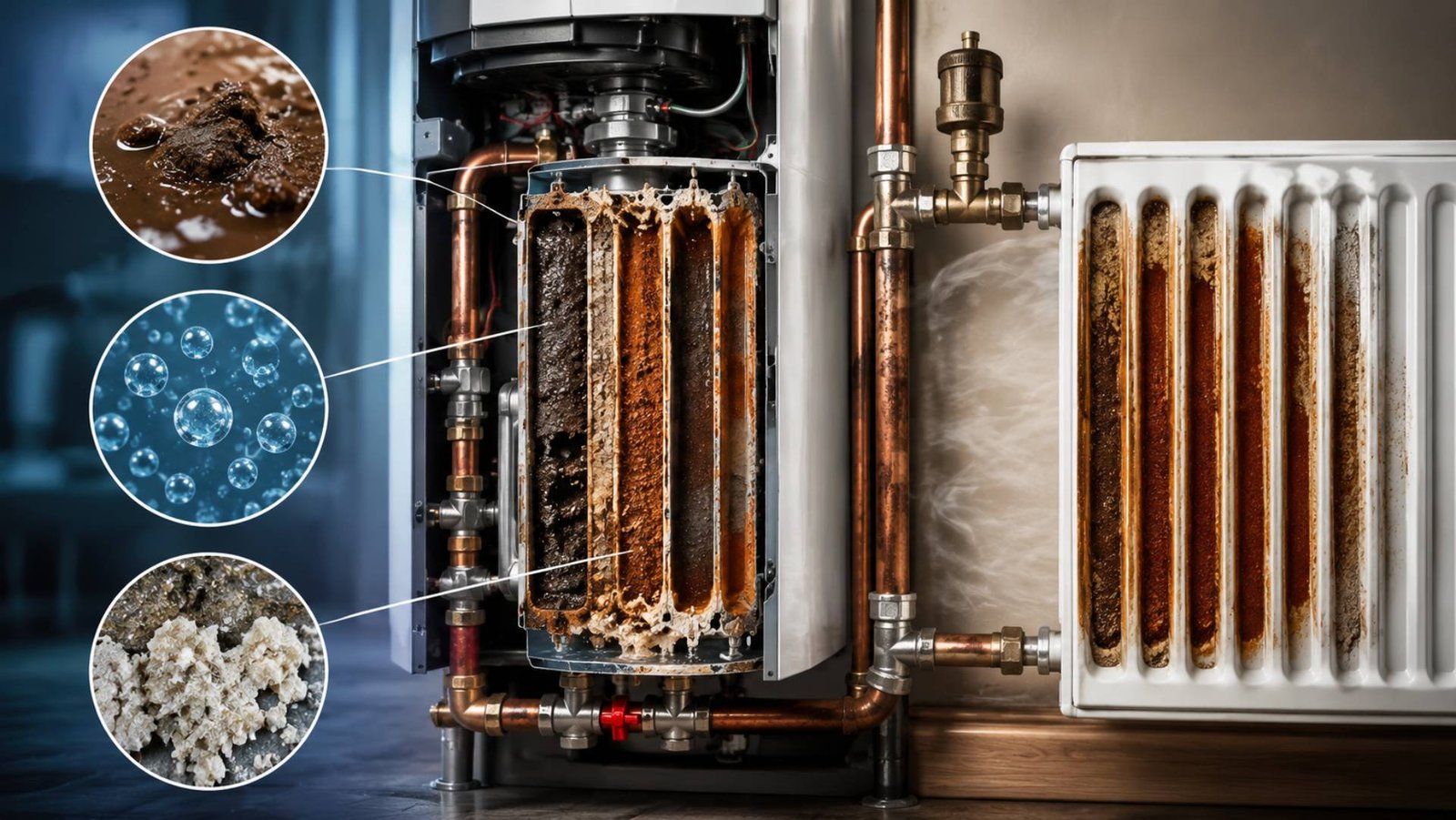
Black heating sludge, mainly magnetite, forms from corrosion. It can collect in radiators, pipes, pumps and boiler components.
Common warning signs include:
- Radiators cold at the bottom
- Dark water when bleeding
- Uneven heating
- Pump noise
- Longer heating times
Sludge can restrict water flow and allow further corrosion.
3. Hard Water Creates Scale
Hard water contains calcium and magnesium, which can form limescale on heated surfaces. Scale reduces heat transfer, restricts waterways and creates hot spots, increasing strain on system components.
Why Radiators Rust From the Inside
Internal rust can stay hidden until the radiator becomes weak. This may lead to pinhole leaks, brown stains or bubbling paint.
When homeowners ask “why is my radiator rusting”, the cause is often poor system-water quality rather than damaged paint. Repainting may hide the stain, but it will not stop internal corrosion.
Warning Signs That Need Attention
Look for pressure loss, dampness around valves, rusty water, unusual boiler noise or radiators that need frequent bleeding. Discolouration near seams or connections should also be checked.
Avoid repeatedly topping up a sealed system without finding the cause, as each refill can introduce oxygen and weaken the corrosion inhibitor.
How to Protect Your Heating System
Follow a Practical Prevention Plan
Arrange for a qualified heating engineer to assess the system when performance changes or leaks appear. Depending on its condition, suitable action may include:
- Testing system water and inhibitor strength.
- Finding and repairing leaks.
- Cleaning contaminated pipework and radiators.
- Adding the correct corrosion inhibitor.
- Installing an appropriate magnetic filter.
- Checking pressure and circulation after servicing.
Expert tip: cleaning alone is not enough. If the source of oxygen entry remains, sludge can return. The system must be cleaned, protected and properly sealed.
FAQs
Can sludge permanently damage a radiator?
Yes. Long-term sludge deposits can restrict circulation and contribute to thinning metal, leaks and poor heat output.
Does bleeding a radiator remove sludge?
No. Bleeding releases trapped air. Sludge usually settles at the bottom and requires appropriate system cleaning.
Is hard water the main cause of radiator rust?
Not usually. Oxygen drives most steel corrosion, while hard-water scale can reduce efficiency and aggravate harmful conditions.
Should I keep topping up low boiler pressure?
Occasional adjustment may be required, but frequent pressure loss suggests a leak or fault that needs investigation.
Can corrosion inhibitors stop existing leaks?
No. Inhibitor helps prevent further corrosion; it cannot restore metal that has already failed.
Final Thoughts
Internal heating-system corrosion is rarely caused by one factor alone. Oxygen begins the reaction, corrosion produces sludge, and a hard-water scale can restrict heat transfer and increase stress. Together, these conditions may reduce efficiency, create cold radiator areas and eventually cause leaks.
Early action is far more effective than covering stains or repeatedly topping up pressure. Watch for discoloration, unusual noises, dirty bleed water and inconsistent heating. Have persistent problems assessed by a qualified heating engineer, keep the inhibitor at the correct strength and investigate how oxygen is entering the system. Effective protection depends on clean water, controlled oxygen exposure and regular maintenance. If you are still wondering why is my radiator rusting, treat the visible mark as a warning from the wider system rather than an isolated surface defect.